

California’s Textile EPR Law: Key 2026 Milestones and Upcoming Producer Deadlines
California continues to expand its extended producer responsibility (EPR) framework to new product categories, capturing an ever-greater number of “producers” responsible to comply across supply chains. In September 2024, Governor Gavin Newsom signed Senate Bill (SB) 707 — the Responsible Textile Recovery Act of 2024 — establishing the first statewide EPR program for apparel and other textile products in the United States. The program is now in the implementation phase, and 2026 marks the first major compliance milestones including the selection of a Producer Responsibility Organization (PRO) and initial producer registration. The law represents another step in California’s broader push toward producer-funded product stewardship programs.




Oregon Federal Court Enjoins EPR Law Enforcement
On February 6, 2026, Sidley prevailed on behalf of the National Association of Wholesaler-Distributors (NAW) in securing a preliminary injunction against Oregon’s first-of-its-kind plastic packaging extended producer responsibility (EPR) law. Judge Michael H. Simon of the U.S. District Court for the District of Oregon granted a preliminary injunction prohibiting the Oregon Department of Environmental Quality (DEQ) from enforcing the Plastic Pollution and Recycling Modernization Act (often referred to as Oregon’s “Recycling Modernization Act” or “RMA”) against NAW and its members, while the case proceeds to trial. The injunction represents a significant milestone, with the federal court acknowledging that producers would likely be injured by the Act’s violations of due process and impacts caused on interstate commerce.



Council on Environmental Quality Issues Long Awaited Guidance for Environmental Review Across Agencies
On September 29, 2025, the Council on Environmental Quality (CEQ) issued long-awaited guidance to formalize agencies’ individual efforts to implement the National Environmental Policy Act (NEPA). After rescinding the CEQ regulations that shaped NEPA for 40+ years and bearing witness to various agencies’ independent efforts to issue their own NEPA rules, CEQ issued new guidance to more systematically guide the agencies’ efforts. As CEQ notes, “NEPA implementation reform now has been called for, authorized, and directed by all three branches of government at the highest possible level: Congress, the President, and the Supreme Court.” The guidance reflects direction from each.




EPA Proposes Overhaul of Greenhouse Gas Reporting Program
On September 16, 2025, the U.S. Environmental Protection Agency (EPA) published a proposed rule that would fundamentally reshape the federal Greenhouse Gas Reporting Program (GHGRP). 90 Fed. Reg. 44591 (Sept. 16, 2025). If finalized, this action would mark a further shift in federal greenhouse gas (GHG) policy and advance the administration’s broader deregulatory agenda.

The Department of Transportation’s Spring 2025 Regulatory Agenda: Big Announcements on Autonomous Vehicles and Automatic Emergency Braking
On September 4, 2025 the National Highway Traffic Safety Administration (NHTSA) announced several planned rulemakings relating to autonomous driving systems as part of the Trump Administration’s Spring 2025 regulatory agenda. The Secretary of Transportation said: “The rules of the road need to be updated to fit the realities of the 21st century. Our changes will eliminate redundant requirements and bring us closer to a single national standard that spurs innovation and prioritizes safety.” The Department of Transportation’s regulatory agenda also has dozens of other items, including two notable actions on automatic emergency braking.


Preferred Equity: A Capital Solution to Meet the Looming “PIS” Deadline
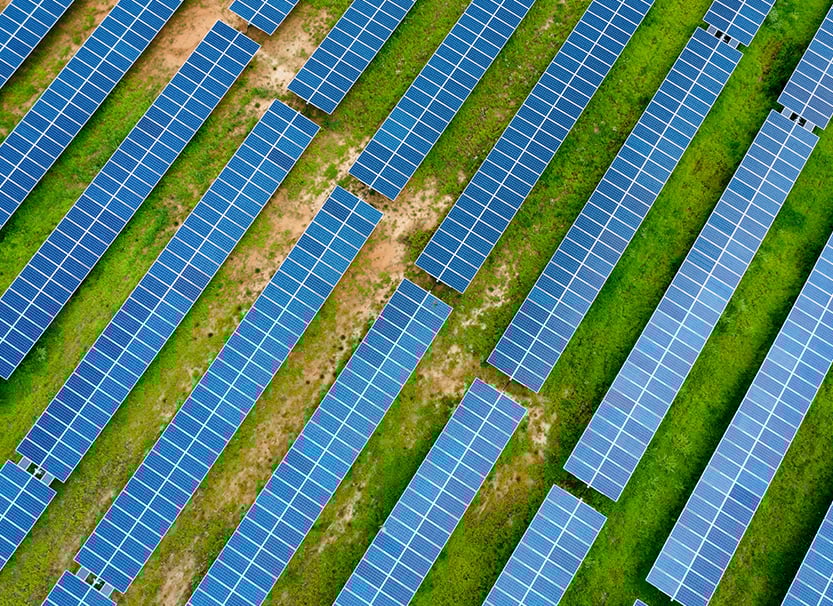
The One Big Beautiful Bill Act signed into law by President Trump on July 4, 2025 (the “OBBBA”) terminates the Section 45Y Clean Electricity Production Tax Credit (the “45Y PTC”) and Section 48E Clean Electricity Investment Tax Credit (the “48E ITC”) for wind and solar facilities that are placed in service (“PIS”) after December 31, 2027, except for those projects that begin construction by July 4, 2026. This significantly accelerates the timeline for sponsors and investors to bring projects online in order to maintain profitability of the project via tax credit sales.



U.S. Department of Energy: U.S. Grid Faces Urgent Reliability Challenges Amid AI-Driven Load Growth and Plant Retirements
A new report by the U.S. Department of Energy provides a comprehensive assessment of the adequacy and reliability of the U.S. electric grid and warns that without urgent reforms and investment, the U.S. electric grid will be unable to support the nation’s economic ambitions, particularly in artificial intelligence (“AI”) and digital infrastructure. The report responds to recent executive orders emphasizing the need for a uniform, data-driven approach to evaluating grid reliability, particularly in the face of accelerating power plant retirements and surging electricity demand from data centers and AI applications.





Agencies Collectively Move to Overhaul Environmental Review Regulations
On July 3, 2025, numerous federal agencies initiated an effort to revise the manner in which they comply with the National Environmental Policy Act (NEPA). NEPA, a cornerstone of environmental governance and project development in the U.S., has historically been implemented through regulations from the Council on Environmental Quality (CEQ). The DC Circuit questioned the legality of those regulations, as well as CEQ’s authority to implement them. And at the direction of President Trump’s February 25, 2025 Executive Order 14154 — “Unleashing American Energy” — CEQ rescinded its NEPA implementing regulations. In place, CEQ provided guidance for agencies that instructed them to update their NEPA procedures by February 2026 in a manner consistent with recent statutory amendments that prioritizes “efficiency and certainty over any other policy objectives.” Today, we are getting our first glimpse into what that process will look like.
EPA Updates Clean Air Act Standards Applicable to Small Waste Incinerators
On June 30, 2025, the U.S. Environmental Protection Agency (EPA) finalized updates to its New Source Performance Standards (NSPS) and Emission Guidelines for Other Solid Waste Incineration (OSWI) units under the Clean Air Act (CAA). These units — combustion systems that incinerate solid waste from commercial or institutional sources not otherwise regulated under specific incinerator categories — include very small municipal waste combustors and institutional incinerators. The final rule includes applicability-related and definitional changes expanding the class of incinerators subject to NSPS, revises the OSWI subcategories and tightens emission limits for key pollutants. It also adopts changes to startup, shutdown, and malfunction (SSM), and expands testing, monitoring, reporting, and recordkeeping requirements that will affect both existing and new OSWI units.
FERC Accelerates Natural Gas Infrastructure Expansion Through Key Waivers and Rulemaking
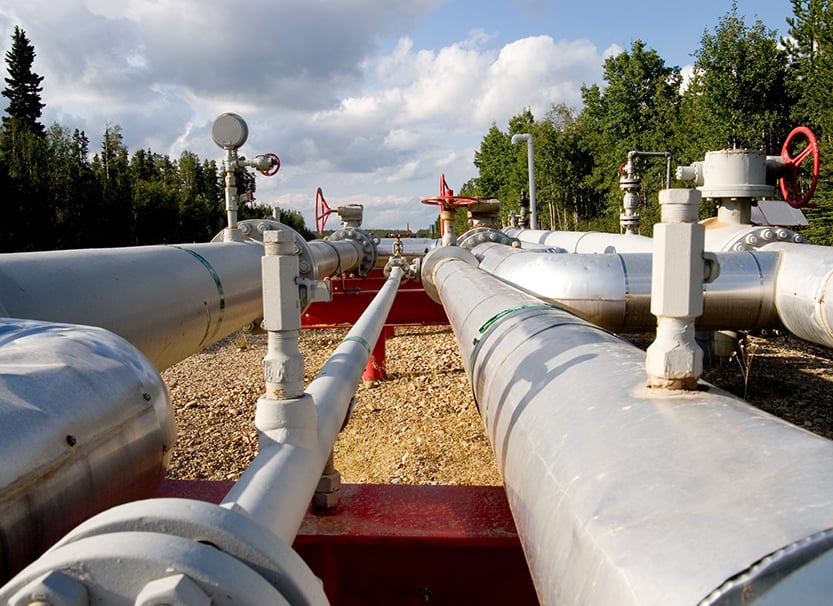
On January 20, 2025, President Donald J. Trump issued Executive Order No. 14156, Declaring a National Energy Emergency, which directed federal agencies to “identify and use all relevant lawful emergency and other authorities available to them to expedite the completion of all authorized and appropriated infrastructure [and] energy . . . projects.” On June 18, 2025, in alignment with this Executive Order and in response to two petitions filed by the Interstate Natural Gas Association of America (“INGAA”), the U.S. Federal Energy Regulatory Commission (“FERC”) advanced a package of regulatory actions aimed at accelerating the development of natural gas infrastructure.