
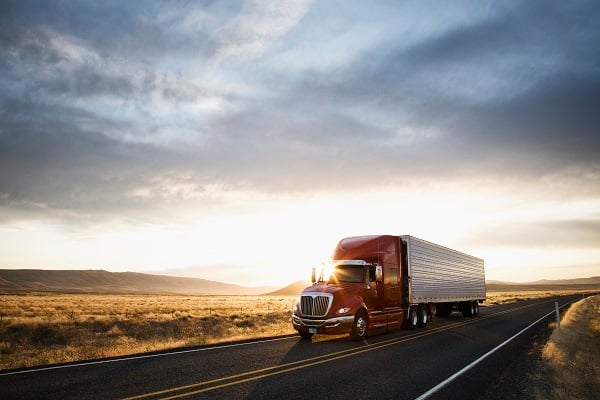
Federal Motor Carrier Safety Administration (FMCSA) Grants a Crucial Regulatory Exemption for Autonomous Trucks
On October 9, the Federal Motor Carrier Safety Administration (FMCSA) took a significant step toward enabling the large-scale deployment of driverless heavy trucks on public roads in the United States. The agency granted autonomous motor carriers a five-year exemption from the regulatory requirement that a truck that stops on the side of the road must put warning triangles on the ground. This seemingly mundane requirement has posed a potential roadblock (so to speak) to the operation of autonomous trucking. The recent exemption, which follows years of petitions and litigation, offers a solution.



Department of Transportation Finalizes Rollback of Corporate Average Fuel Economy (CAFE) Standards for Passenger Cars and Light Trucks
On September 28, 2026, the National Highway Traffic Safety Administration (NHTSA) finalized its Corporate Average Fuel Economy (CAFE) standards for passenger cars and light trucks sold in the United States for model years (MYs) 2022–2031. The final rule represents one of the most significant deregulatory actions of the second Trump administration.
NHTSA Reverses Course on Standalone Engine Fuel Economy Standards for Medium- and Heavy-Duty Vehicles
On August 31, 2026, the National Highway Traffic Safety Administration (NHTSA) published an interpretive rule concluding that it lacks statutory authority to establish standalone fuel economy standards for engines used in certain commercial medium-duty and heavy-duty (MDHD) on-highway vehicles. The new interpretation reverses an approach NHTSA has followed since 2011 and is the latest step in what the agency has described as an effort to “reset” its federal fuel economy programs.

The Department of Transportation’s 2026 Regulatory Agenda: Acceleration of Autonomous Vehicle Rulemaking and Future Action on Fuel Economy
On July 7, 2026, the Department of Transportation released its 2026 unified rulemaking agenda. Many of the items on it relate to autonomous driving systems. They signal that the Trump Administration is accelerating its efforts to promote the development and deployment of autonomous technologies, while — with notable exceptions, particularly fuel economy — putting other regulatory efforts on the back burner. (more…)
NHTSA Proposes Amending Federal Brake Standards for Autonomous Vehicles
On June 26, the National Highway Traffic Safety Administration published another proposed rulemaking designed to promote the deployment of autonomous vehicles on public roads. The proposal would amend Federal Motor Vehicle Safety Standard (FMVSS) No. 135, “Light vehicle brake systems,” by removing requirements for hand- and foot-operated brake controls in vehicles that operate without a human driver, while retaining stopping distance performance requirements. This rulemaking represents a meaningful—if still incremental—step in modernizing the federal regulatory framework for autonomous vehicles, particularly those that are manufactured without the standard equipment designed for human drivers.

The BUILD America 250 Act: Creating a Federal Framework for Autonomous Commercial Vehicles
On May 22, the House Transportation and Infrastructure Committee approved the BUILD America 250 Act, a five-year surface transportation reauthorization bill intended to replace the Infrastructure Investment and Jobs Act (IIJA), which expires on September 30, 2026. In addition to authorizing hundreds of billions of dollars in highway funding and various other measures, the bill includes several provisions focusing on the emerging autonomous trucking industry. The legislation would establish federal safety requirements for commercial autonomous vehicles (AVs), would resolve the contentious issue of warning beacons on driverless trucks, and would potentially preempt at least some state and local regulation.
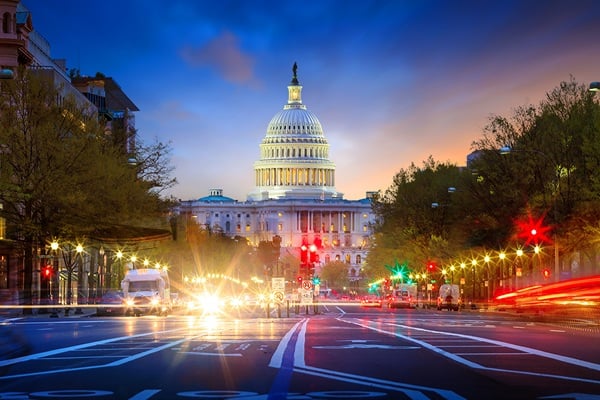
D.C. Council Proposes a Costly Path for Autonomous Vehicles in the Nation’s Capital
On May 1, three members of the D.C. Council introduced a new bill, titled the Autonomous Vehicle Deployment Authorization Amendment Act of 2026, that would create a pathway for the deployment of autonomous vehicles (AVs) in the District of Columbia. Reflecting the Council’s approach to AV deployment, the lead sponsor of the legislation has said that “we didn’t need to be the first city to bring driverless cars to our streets, but I don’t want us to be the last.”
NHTSA Issues the First Defect Recall Order in Decades
On April 29, 2026, the National Highway Traffic Safety Administration (NHTSA) took a rare step: It issued a final decision ordering a recall of vehicle equipment—in this case, air bag inflators manufactured in China that allegedly caused numerous deaths and serious injuries by exploding during a crash. This was the agency’s first recall order in decades and illustrates the unusual situation in which the agency found itself.

California Finalizes a New Regulatory Regime for Testing and Deploying Autonomous Vehicles
On April 28, the California Department of Motor Vehicles released the finalized version of the state’s new autonomous vehicle regulations. More than a year in development and shaped by extensive public debate, these rules carry significant implications for companies that manufacture and operate autonomous vehicles in the nation’s most populous state.
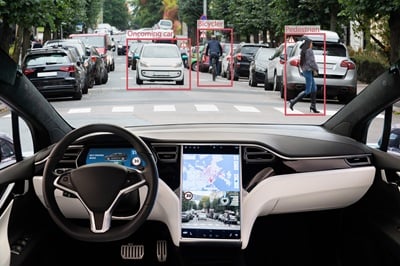
China Moves Toward Nationwide Autonomous Vehicle Regulation
The Chinese government recently took a significant step toward establishing nationwide standards for autonomous vehicles. On April 13, the public comment period closed on the Ministry of Industry and Information Technology’s new proposal for mandatory safety standards. Titled Safety Requirements for Autonomous Driving Systems of Intelligent Connected Vehicles, the 62-page proposal, if finalized, would further the country’s ambitions to be the world leader in autonomous vehicles (AVs).