
In Landmark TSCA Decision, Fifth Circuit Vacates EPA’s Methylene Chloride Rule, Limits EPA’s Interpretation of “Unreasonable Risk”
On September 15, 2026, a unanimous panel of the U.S. Court of Appeals for the Fifth Circuit vacated the EPA’s 2024 risk management rule for methylene chloride and the unreasonable-risk determination underlying it. East Fork Enterprises, Inc. v. EPA, Nos. 24-60227 & 24-60256 (5th Cir. Sept. 15, 2026). The Court granted the industry petitioners’ petition for review, denied Sierra Club’s separate challenge seeking more stringent regulation, and remanded the matter to the EPA.




OSHA Schedules Public Hearings on Deregulatory Proposals
The Occupational Safety and Health Administration (OSHA) has scheduled several informal public hearings on more than 20 deregulatory rulemaking proposals that OSHA released last summer, along with a recent proposal addressing compliance deadlines under OSHA’s Walking-Working Surfaces standard. Together, these proposals reach standards that touch employers across a wide range of industries. Stakeholders who want to shape the outcome have a narrow window to act. These virtual hearings kick off beginning Wednesday, August 19, 2026, at 9:30 a.m. EST.
The proposals fit under the administration’s Executive Order 14192 on “Unleashing Prosperity Through Deregulation” and the U.S. Department of Labor’s related deregulatory initiative. OSHA describes its overarching goal as modernizing workplace safety standards, reducing compliance burdens, and increasing flexibility across industries.


NHTSA Issues the First Defect Recall Order in Decades
On April 29, 2026, the National Highway Traffic Safety Administration (NHTSA) took a rare step: It issued a final decision ordering a recall of vehicle equipment—in this case, air bag inflators manufactured in China that allegedly caused numerous deaths and serious injuries by exploding during a crash. This was the agency’s first recall order in decades and illustrates the unusual situation in which the agency found itself.

California Finalizes a New Regulatory Regime for Testing and Deploying Autonomous Vehicles
On April 28, the California Department of Motor Vehicles released the finalized version of the state’s new autonomous vehicle regulations. More than a year in development and shaped by extensive public debate, these rules carry significant implications for companies that manufacture and operate autonomous vehicles in the nation’s most populous state.
China Moves Toward Nationwide Autonomous Vehicle Regulation
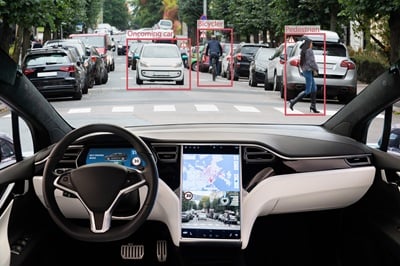
The Chinese government recently took a significant step toward establishing nationwide standards for autonomous vehicles. On April 13, the public comment period closed on the Ministry of Industry and Information Technology’s new proposal for mandatory safety standards. Titled Safety Requirements for Autonomous Driving Systems of Intelligent Connected Vehicles, the 62-page proposal, if finalized, would further the country’s ambitions to be the world leader in autonomous vehicles (AVs).
Hot Off the Press: What Employers Should Know About OSHA’s Updated National Emphasis Program for Heat Illness
The Occupational Safety and Health Administration has revised its National Emphasis Program (NEP) for heat, removing a specific inspection-growth target that had been part of the initiative when the Program first launched back in 2022. In OSHA’s April 10, 2026 news release, it announced that the revised directive took effect immediately and will remain in place for five years. OSHA made a few changes to the Program, including removing outdated background information, updating Program links, and reorganizing appendices addressing heat program evaluation and citation guidance.

A New Global Milestone for Autonomous Vehicles: What the UN Global Technical Regulation on Automated Driving Systems Means for Autonomy in the U.S. and Around the World
In late January, a United Nations regulatory body, the UN Economic Commission for Europe (UNECE) Working Party on Automated/Autonomous and Connected Vehicles (GRVA), approved a Global Technical Regulation on Automated Driving Systems (ADS). The draft Global Technical Regulation (GTR), which took roughly 10 years to finalize, offers a framework for signatories on how to regulate and validate autonomous vehicles, emphasizing the “safety case” approach—a structured, evidence-based argument justifying the vehicle is sufficiently safe for market introduction. Rather than prescribing a single, bright-line performance metric, the framework leaves room for jurisdictions to be somewhat flexible in how they apply the guidance to their own, country-specific legal regimes.
Walk Like a CSHO: Cal/OSHA Proposes Its Own “Walkaround Rule”
On February 13, 2026, Cal/OSHA published a notice of proposed rulemaking (NPRM) to clarify who can join its onsite inspections. To be codified as Title 8 § 331.8 if implemented, Cal/OSHA’s stated goal is to match federal OSHA’s 2024 updates to 29 C.F.R. § 1903.8 and expand upon California Labor Code section 6314, which already states that “a representative authorized by . . . employees” can accompany Cal/OSHA inspectors during their “tour” of the worksite. In its new proposal, Cal/OSHA explicitly expands the definition of “representative(s) authorized by employees” to include an “employee of the employer, a third party, or the collective bargaining representative.”


Members of Congress Propose a New Bill to Regulate Autonomous Vehicles
This week, U.S. Representatives Bob Latta and Debbie Dingell released the discussion draft of a new bill: the Safely Ensuring Lives Future Deployment and Research in Vehicle Evolution (SELF DRIVE) Act of 2026. This legislation, if enacted, would be the first federal statute dedicated to the safety of autonomous vehicles. It would have major implications for not only federal, but also state and local regulation. It would also raise some key legal questions and require federal regulators to promulgate a new federal motor vehicle safety standard very different from any of its predecessors. (more…)
Open for Business: A Look at NHTSA Auto Safety Investigations in the Second Trump Administration
The second Trump administration has seen drastic changes in the enforcement practices of many federal regulatory agencies. One area where investigative activity continues to be robust is auto safety. The National Highway Traffic Safety Administration (NHTSA) has, in, recent months, been opening investigations at a brisk pace. Some of NHTSA’s work, particularly relating to autonomous operations and counterfeit equipment, has attracted substantial public attention. Other investigations have been more business as usual.