
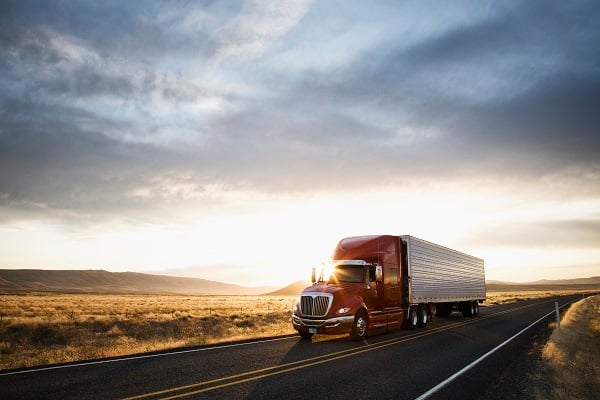
NHTSA Reverses Course on Standalone Engine Fuel Economy Standards for Medium- and Heavy-Duty Vehicles
On August 31, 2026, the National Highway Traffic Safety Administration (NHTSA) published an interpretive rule concluding that it lacks statutory authority to establish standalone fuel economy standards for engines used in certain commercial medium-duty and heavy-duty (MDHD) on-highway vehicles. The new interpretation reverses an approach NHTSA has followed since 2011 and is the latest step in what the agency has described as an effort to “reset” its federal fuel economy programs.




NHTSA Announces a Host of Actions on Autonomous Vehicles
On July 30, on the last day of the SAE International Automated Transportation Symposium, the National Highway Traffic Safety Administration (NHTSA) released several rulemakings and announcements focused on automated driving systems (ADS). These announcements further NHTSA’s efforts to, in the agency’s words, “accelerate American automated vehicle (AV) innovation.” In remarks at the conference, NHTSA’s Administrator Jonathan Morrison indicated the agency’s approach “is one of balance, combining policy choices that enable innovation with an unapologetic exercise of our oversight and enforcement authorities.”
EPA Proposes Two-Year Delay of Biden-Era Vehicle Emissions Standards
On May 14, 2026, the U.S. Environmental Protection Agency (EPA) announced that it is reconsidering the criteria pollutant standards for new light- and medium-duty vehicles. The first phase of EPA’s proposal would push back the phase-in schedule of the “Tier 4” criteria pollutant standards from model year 2027 to model year 2029, giving automakers two additional model years to comply with the existing Tier 3 framework before the more stringent requirements begin to apply—and giving EPA time to conduct a second rulemaking to amend the Tier 4 emissions standards.



NHTSA Issues the First Defect Recall Order in Decades
On April 29, 2026, the National Highway Traffic Safety Administration (NHTSA) took a rare step: It issued a final decision ordering a recall of vehicle equipment—in this case, air bag inflators manufactured in China that allegedly caused numerous deaths and serious injuries by exploding during a crash. This was the agency’s first recall order in decades and illustrates the unusual situation in which the agency found itself.

California Finalizes a New Regulatory Regime for Testing and Deploying Autonomous Vehicles
On April 28, the California Department of Motor Vehicles released the finalized version of the state’s new autonomous vehicle regulations. More than a year in development and shaped by extensive public debate, these rules carry significant implications for companies that manufacture and operate autonomous vehicles in the nation’s most populous state.
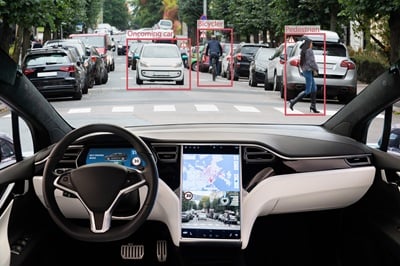
China Moves Toward Nationwide Autonomous Vehicle Regulation
The Chinese government recently took a significant step toward establishing nationwide standards for autonomous vehicles. On April 13, the public comment period closed on the Ministry of Industry and Information Technology’s new proposal for mandatory safety standards. Titled Safety Requirements for Autonomous Driving Systems of Intelligent Connected Vehicles, the 62-page proposal, if finalized, would further the country’s ambitions to be the world leader in autonomous vehicles (AVs).
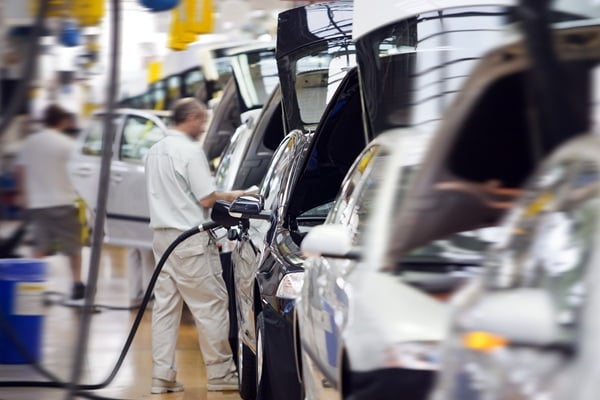
Washington State Allows Direct Sales of Electric Vehicles
A new statute in Washington state allows certain manufacturers of electric vehicles to sell their vehicles directly to consumers, rather than through independent dealers. The law, passed as SB 6354, makes a meaningful change to the state’s automotive dealer-franchise framework through a carefully crafted exception. It allows a manufacturer to own, operate, or control a dealership selling its own vehicles and further allows the manufacturer to offer related financing, leasing, and servicing.

A New Global Milestone for Autonomous Vehicles: What the UN Global Technical Regulation on Automated Driving Systems Means for Autonomy in the U.S. and Around the World
In late January, a United Nations regulatory body, the UN Economic Commission for Europe (UNECE) Working Party on Automated/Autonomous and Connected Vehicles (GRVA), approved a Global Technical Regulation on Automated Driving Systems (ADS). The draft Global Technical Regulation (GTR), which took roughly 10 years to finalize, offers a framework for signatories on how to regulate and validate autonomous vehicles, emphasizing the “safety case” approach—a structured, evidence-based argument justifying the vehicle is sufficiently safe for market introduction. Rather than prescribing a single, bright-line performance metric, the framework leaves room for jurisdictions to be somewhat flexible in how they apply the guidance to their own, country-specific legal regimes.
Open for Business: A Look at NHTSA Auto Safety Investigations in the Second Trump Administration
The second Trump administration has seen drastic changes in the enforcement practices of many federal regulatory agencies. One area where investigative activity continues to be robust is auto safety. The National Highway Traffic Safety Administration (NHTSA) has, in, recent months, been opening investigations at a brisk pace. Some of NHTSA’s work, particularly relating to autonomous operations and counterfeit equipment, has attracted substantial public attention. Other investigations have been more business as usual.
NHTSA Delays Implementing Updates to the Five-Star Safety Ratings Program (NCAP)
On September 22, the National Highway Traffic Safety Administration (NHTSA) published a notice delaying by one year the upcoming implementation date for two recent updates to the agency’s New Car Assessment Program (NCAP). This change illustrates NCAP’s continuing importance to manufacturers and NHTSA’s recent willingness to push back the compliance dates of completed rulemakings. (more…)