
NHTSA Proposes Amending Federal Crash Avoidance Standards for Autonomous Vehicles
On March 16, the National Highway Traffic Safety Administration published two proposed rulemakings designed to ease the path for manufacturing autonomous vehicles and deploying them on public roads. Both proposals would amend existing Federal Motor Vehicle Safety Standards (FMVSS) by removing requirements for certain safety equipment that may be unnecessary in vehicles without a human driver. These rulemakings represent an incremental step, not a game changer, in paving the way for a driverless future.


A New Global Milestone for Autonomous Vehicles: What the UN Global Technical Regulation on Automated Driving Systems Means for Autonomy in the U.S. and Around the World
In late January, a United Nations regulatory body, the UN Economic Commission for Europe (UNECE) Working Party on Automated/Autonomous and Connected Vehicles (GRVA), approved a Global Technical Regulation on Automated Driving Systems (ADS). The draft Global Technical Regulation (GTR), which took roughly 10 years to finalize, offers a framework for signatories on how to regulate and validate autonomous vehicles, emphasizing the “safety case” approach—a structured, evidence-based argument justifying the vehicle is sufficiently safe for market introduction. Rather than prescribing a single, bright-line performance metric, the framework leaves room for jurisdictions to be somewhat flexible in how they apply the guidance to their own, country-specific legal regimes.


Members of Congress Propose a New Bill to Regulate Autonomous Vehicles
This week, U.S. Representatives Bob Latta and Debbie Dingell released the discussion draft of a new bill: the Safely Ensuring Lives Future Deployment and Research in Vehicle Evolution (SELF DRIVE) Act of 2026. This legislation, if enacted, would be the first federal statute dedicated to the safety of autonomous vehicles. It would have major implications for not only federal, but also state and local regulation. It would also raise some key legal questions and require federal regulators to promulgate a new federal motor vehicle safety standard very different from any of its predecessors. (more…)
Department of Transportation Proposes Dramatic Rollback of Corporate Average Fuel Economy (CAFE) Standards
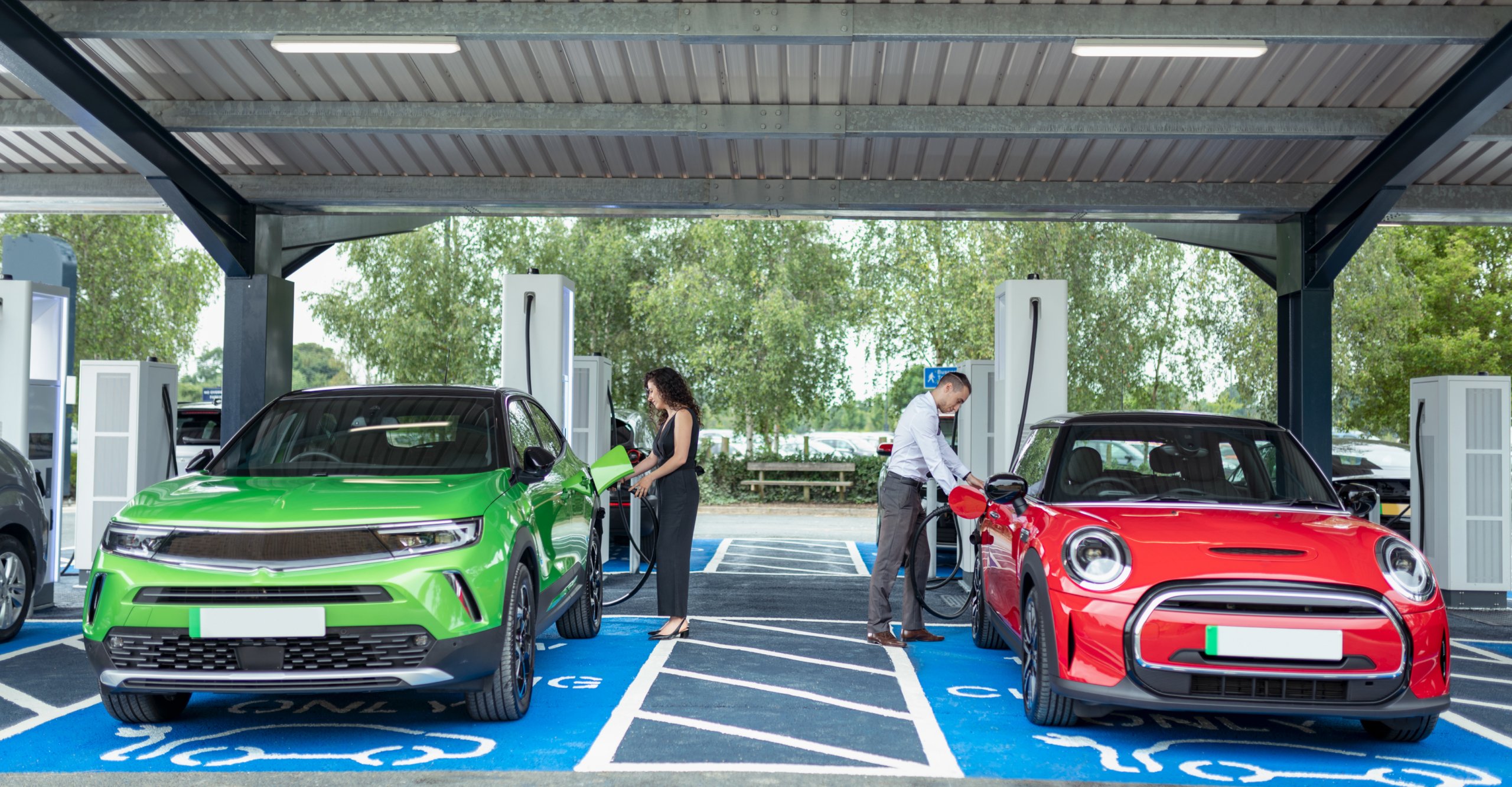
On December 3, in connection with a highly publicized announcement in the Oval Office and a statement from the White House, the Department of Transportation proposed a rulemaking that would reset Corporate Average Fuel Economy (CAFE) standards for passenger cars and light trucks sold in the United States for model years 2022-2031. Along with Congress’s recent elimination of civil penalties for CAFE noncompliance, the proposal would roll back more stringent fuel economy targets set in previous Administrations—including the first Trump Administration. The proposed changes have significant implications for, among other things, the electric vehicle market.
Open for Business: A Look at NHTSA Auto Safety Investigations in the Second Trump Administration
The second Trump administration has seen drastic changes in the enforcement practices of many federal regulatory agencies. One area where investigative activity continues to be robust is auto safety. The National Highway Traffic Safety Administration (NHTSA) has, in, recent months, been opening investigations at a brisk pace. Some of NHTSA’s work, particularly relating to autonomous operations and counterfeit equipment, has attracted substantial public attention. Other investigations have been more business as usual.
The Department of Transportation’s Spring 2025 Regulatory Agenda: Big Announcements on Autonomous Vehicles and Automatic Emergency Braking
On September 4, 2025 the National Highway Traffic Safety Administration (NHTSA) announced several planned rulemakings relating to autonomous driving systems as part of the Trump Administration’s Spring 2025 regulatory agenda. The Secretary of Transportation said: “The rules of the road need to be updated to fit the realities of the 21st century. Our changes will eliminate redundant requirements and bring us closer to a single national standard that spurs innovation and prioritizes safety.” The Department of Transportation’s regulatory agenda also has dozens of other items, including two notable actions on automatic emergency braking.


Congress Eliminates Corporate Average Fuel Economy (CAFE) Penalties for Passenger Cars and Light Trucks
In one of its many changes, the One Big Beautiful Bill Act, enacted on July 4, 2025, eliminated civil penalties for noncompliance with federal fuel economy standards. Specifically, Section 40006 of the Act amends the language of the Corporate Average Fuel Economy (CAFE) statute to reset the maximum civil penalty to $0.00. Although the statute and its implementing regulations otherwise remain in place, this amendment removes any civil penalties for producing passenger cars and light trucks that do not meet fuel economy requirements.

Department of Transportation Announces a Streamlined Regulatory Exemption Process for Autonomous Vehicles
On June 13, the U.S. Department of Transportation (DOT) and the National Highway Traffic Safety Administration (NHTSA) announced changes to the process for exempting autonomous vehicle companies from the Federal Motor Vehicle Safety Standards (FMVSS) under 49 C.F.R. Part 555. Part 555 offers an important route for the sale and deployment of innovative autonomous vehicles. The recent announcement evidences a desire to speed up agency decisions on Part 555 exemptions, though the application process will continue to be a substantial undertaking.

Deregulatory Announcements at the U.S. Department of Transportation: A Sign of Bigger Things to Come?
On May 29, the U.S. Department of Transportation announced more than 50 deregulatory actions at the three operating administrations of the department that focus on road transportation: the Federal Highway Administration (FHWA), Federal Motor Carrier Safety Administration (FMCSA), and National Highway Traffic Safety Administration (NHTSA). The Secretary of Transportation was quoted as saying, “my department is slashing duplicative and outdated regulations that are unnecessarily burdensome, waste taxpayer dollars, and fail to ensure safety.”

NHTSA Announces New Policies to Promote Autonomous Vehicles
On April 24, 2025, the Department of Transportation announced the new Automated Vehicle (AV) Framework from the National Highway Traffic Safety Administration (NHTSA). The announcement, which was accompanied by a video from the Secretary of Transportation, included two new policy developments. First, NHTSA released a Third Amended version of its Standing General Order on Automated Driving Systems (ADS) and Advanced Driver Assistance Systems (ADAS). Second, NHTSA announced that it would expand its exemption program for autonomous vehicles that do not fully comply with NHTSA’s Federal Motor Vehicle Safety Standards. This update discusses both developments and their broader implications.