EPA Updates Clean Air Act Standards Applicable to Small Waste Incinerators
On June 30, 2025, the U.S. Environmental Protection Agency (EPA) finalized updates to its New Source Performance Standards (NSPS) and Emission Guidelines for Other Solid Waste Incineration (OSWI) units under the Clean Air Act (CAA). These units — combustion systems that incinerate solid waste from commercial or institutional sources not otherwise regulated under specific incinerator categories — include very small municipal waste combustors and institutional incinerators. The final rule includes applicability-related and definitional changes expanding the class of incinerators subject to NSPS, revises the OSWI subcategories and tightens emission limits for key pollutants. It also adopts changes to startup, shutdown, and malfunction (SSM), and expands testing, monitoring, reporting, and recordkeeping requirements that will affect both existing and new OSWI units.




Supreme Court Issues Split Rulings on Clean Air Act Venue Disputes
On June 18, 2025, the U.S. Supreme Court issued decisions in two significant Clean Air Act cases — EPA v. Calumet Shreveport Refining and Oklahoma v. EPA — clarifying the appropriate venue for legal challenges to certain final EPA actions. In Calumet, the Court held that EPA’s universal denials of small-refinery-exemption (SRE) petitions under the Renewable Fuel Standard program were “based on a determination of nationwide scope or effect,” and thus challenges may only be brought in the D.C. Circuit Court of Appeals. By contrast, the Court in Oklahoma held that challenges to EPA’s disapproval of State Implementation Plans (SIPs) belong in the applicable regional circuit courts because the agency’s determinations were based on facts and rationales unique to each state. Although some gray areas remain, the twin decisions put several long-standing venue issues to rest and should encourage quicker resolution of Clean Air Act regulatory challenges.




Presidential Exemption for Certain Stationary Sources of Air Pollution
The Environmental Protection Agency (EPA) has opened an electronic mailbox to allow regulated sources to request a Presidential Exemption under section 112(i)(4) of the Clean Air Act (CAA) from nine National Emission Standards for Hazardous Air Pollutants (NESHAPs) that EPA is reconsidering (see table below) across the energy, manufacturing, and chemical sectors.



The Future of Environmental Review of Federal Permitting Remains Unsteady as White House Seeks to Rescind NEPA Regulations
On February 19, 2025, the Council on Environmental Quality (CEQ) submitted a proposed Interim Final Rule rescinding its regulations implementing the National Environmental Policy Act (NEPA). The Rule will become effective 45 days after its publication in the Federal Register, marking the end of nearly 50 years of CEQ regulations serving as the foundation for federal environmental reviews. This Interim Rule comes right at the deadline set by President Trump’s Executive Order (EO) 14154—Unleashing American Energy—which rescinded CEQ’s authority to issue NEPA regulations and revoked President Carter’s EO 11991, which had originally directed CEQ to promulgate implementing regulations.



EPA Publishes First-Of-Its-Kind Framework for Considering Cumulative Impacts Across Agency Actions
On November 21, 2024, the U.S. Environmental Protection Agency (EPA) published Notice of a newly developed draft framework intended to provide all EPA programs with a shared reference point for determining when and how to analyze or consider cumulative impacts—defined broadly to include the totality of exposures to combinations of environmental stressors and their effects on health and quality-of-life outcomes. Keeping pace with the Biden administration EPA’s environmental justice drive, key goals of the Interim Framework for Advancing Consideration of Cumulative Impacts include empowering EPA to (1) more fully and accurately characterize the realities communities face, (2) pinpoint the levers of decision making and identify opportunities for interventions that improve health and quality of life while advancing equity, and (3) increase meaningful engagement, improve transparency, and center actions on improving health and environmental conditions in communities.
U.S. EPA Removes Regulatory Affirmative Defense Provision Against Alleged Violations of Oil and Gas Facility NESHAPs
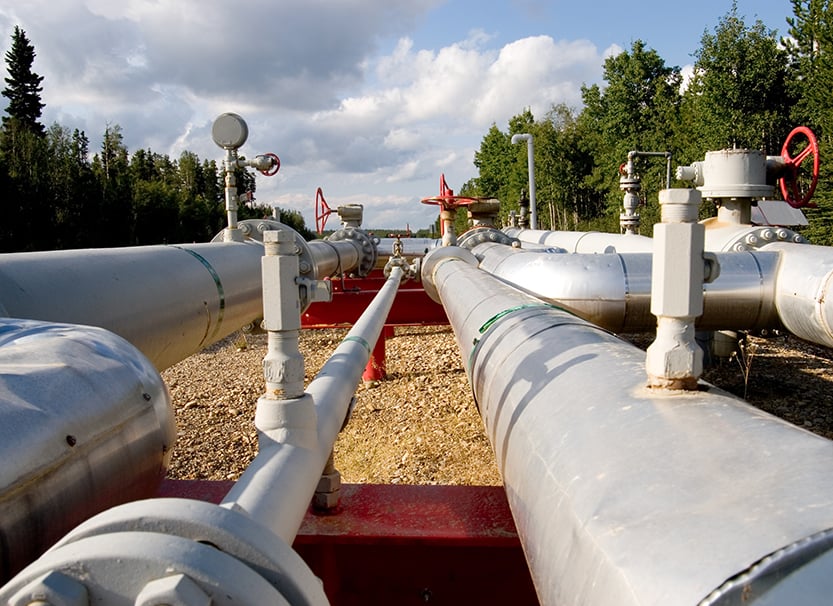
On October 22, 2024, the U.S. Environmental Protection Agency (EPA) published a final rule removing an affirmative defense from Clean Air Act (CAA) National Emission Standards for Hazardous Air Pollutants (NESHAP) regulations for the Oil and Natural Gas Production Facility and Natural Gas Transmission and Storage Facility Source Categories (Final Rule).[1] Prior to the Final Rule, owners or operators could assert an affirmative defense that alleged NESHAP standard violations were caused by an equipment malfunction.[2] A “malfunction” is defined as any sudden, infrequent, and not reasonably preventable failure of air pollution control and monitoring equipment, process equipment, or a process to operate in a normal or usual manner.[3]



U.S. Supreme Court Stays EPA Ozone Interstate Transport Rule
On Thursday, in Ohio v. Environmental Protection Agency, the U.S. Supreme Court stayed an Environmental Protection Agency (EPA) rule that would have required the implementation of additional, significant emissions controls in power plants, pipelines, cement factories, glass factories, iron and steel mills, paper mills, and other industrial facilities across 23 states. The stay provides relief to those industries as they challenge various aspects of the rule in the U.S. Court of Appeals for the D.C. Circuit — challenges on which the Supreme Court found the states and industries were likely to succeed.


The Newest Phase of EPA’s Greenhouse Gas Emissions Standards: Phase 3
On March 29, 2024, the U.S. Environmental Protection Agency (EPA) announced its most recent national greenhouse gas (GHG) pollution standards for heavy-duty (HD) vehicles, including HD vocational vehicles and tractors. The rule establishes new CO2 emission standards for model year (MY) 2032 and later HD vehicles, with more stringent CO2 standards phasing in as early as MY 2027 for certain vehicle categories.

D.C. Circuit Largely Vacates EPA State Implementation Plan Call on Startup, Shutdown, and Malfunction Rules
In a 2–1 decision, the U.S. Court of Appeals for the District of Columbia Circuit (D.C. Circuit) largely vacated an Environmental Protection Agency (EPA) rule requiring 32 states to amend their Clean Air Act implementation plans (called State Implementation Plans, or SIPs) by removing provisions providing either exemptions or affirmative defenses to excess emissions from unit startups, shutdowns, or malfunctions (SSM) — times when pollution controls often cannot fully function as needed.[1] Sources in states that still have or revert to allowing an SSM defense may now have this important operational flexibility. However, stakeholders should track the actions of their individual states and keep close watch on whether EPA or environmental groups seek rehearing or appeal the ruling.
U.S. EPA Sets Stricter National Ambient Air Quality Standards for Particulate Matter
On February 7, 2024, the U.S. Environmental Protection Agency (EPA) issued a final rule under the Clean Air Act lowering the primary (health-based) annual National Ambient Air Quality Standard (NAAQS) for fine particulate matter 2.5 micrometers in diameter or smaller (PM2.5) from 12 to 9 micrograms per cubic meter (µg/m3). EPA asserts that the stricter standard is based on scientific evidence showing that the current PM2.5 standard (12 µg/m3), which was established in 2012 and retained in 2020, does not sufficiently protect human health. According to EPA, based on air monitoring data from 2020-22, 119 counties would not meet the new standard of 9 µg/m3.
