
Washington State Allows Direct Sales of Electric Vehicles
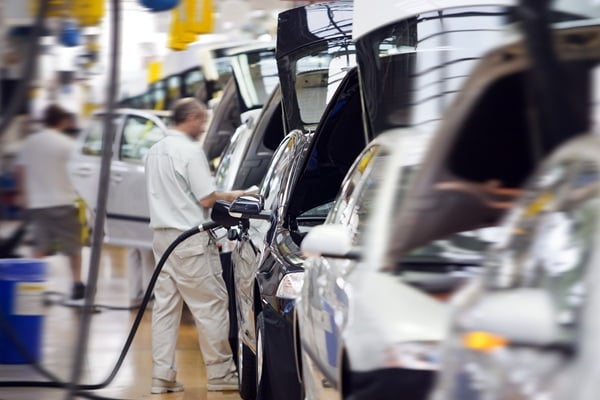
A new statute in Washington state allows certain manufacturers of electric vehicles to sell their vehicles directly to consumers, rather than through independent dealers. The law, passed as SB 6354, makes a meaningful change to the state’s automotive dealer-franchise framework through a carefully crafted exception. It allows a manufacturer to own, operate, or control a dealership selling its own vehicles and further allows the manufacturer to offer related financing, leasing, and servicing.


NHTSA Proposes Amending Federal Crash Avoidance Standards for Autonomous Vehicles
On March 16, the National Highway Traffic Safety Administration published two proposed rulemakings designed to ease the path for manufacturing autonomous vehicles and deploying them on public roads. Both proposals would amend existing Federal Motor Vehicle Safety Standards (FMVSS) by removing requirements for certain safety equipment that may be unnecessary in vehicles without a human driver. These rulemakings represent an incremental step, not a game changer, in paving the way for a driverless future.

A New Global Milestone for Autonomous Vehicles: What the UN Global Technical Regulation on Automated Driving Systems Means for Autonomy in the U.S. and Around the World
In late January, a United Nations regulatory body, the UN Economic Commission for Europe (UNECE) Working Party on Automated/Autonomous and Connected Vehicles (GRVA), approved a Global Technical Regulation on Automated Driving Systems (ADS). The draft Global Technical Regulation (GTR), which took roughly 10 years to finalize, offers a framework for signatories on how to regulate and validate autonomous vehicles, emphasizing the “safety case” approach—a structured, evidence-based argument justifying the vehicle is sufficiently safe for market introduction. Rather than prescribing a single, bright-line performance metric, the framework leaves room for jurisdictions to be somewhat flexible in how they apply the guidance to their own, country-specific legal regimes.

Members of Congress Propose a New Bill to Regulate Autonomous Vehicles
This week, U.S. Representatives Bob Latta and Debbie Dingell released the discussion draft of a new bill: the Safely Ensuring Lives Future Deployment and Research in Vehicle Evolution (SELF DRIVE) Act of 2026. This legislation, if enacted, would be the first federal statute dedicated to the safety of autonomous vehicles. It would have major implications for not only federal, but also state and local regulation. It would also raise some key legal questions and require federal regulators to promulgate a new federal motor vehicle safety standard very different from any of its predecessors. (more…)

The State of Play in California for Autonomous Vehicles
More autonomous vehicles are operating in California than anywhere else in America. And yet California has some of the most extensive autonomous regulations in the country. While some other states have taken a relatively laissez-faire approach to autonomous vehicles, California’s rules are lengthy and elaborate. Even as various operators have been able to work through the requirements to operate in the state, they have been a major lift. And autonomous heavy trucking has been entirely prohibited. (more…)
Open for Business: A Look at NHTSA Auto Safety Investigations in the Second Trump Administration
The second Trump administration has seen drastic changes in the enforcement practices of many federal regulatory agencies. One area where investigative activity continues to be robust is auto safety. The National Highway Traffic Safety Administration (NHTSA) has, in, recent months, been opening investigations at a brisk pace. Some of NHTSA’s work, particularly relating to autonomous operations and counterfeit equipment, has attracted substantial public attention. Other investigations have been more business as usual.
NHTSA Delays Implementing Updates to the Five-Star Safety Ratings Program (NCAP)
On September 22, the National Highway Traffic Safety Administration (NHTSA) published a notice delaying by one year the upcoming implementation date for two recent updates to the agency’s New Car Assessment Program (NCAP). This change illustrates NCAP’s continuing importance to manufacturers and NHTSA’s recent willingness to push back the compliance dates of completed rulemakings. (more…)
The Department of Transportation’s Spring 2025 Regulatory Agenda: Big Announcements on Autonomous Vehicles and Automatic Emergency Braking
On September 4, 2025 the National Highway Traffic Safety Administration (NHTSA) announced several planned rulemakings relating to autonomous driving systems as part of the Trump Administration’s Spring 2025 regulatory agenda. The Secretary of Transportation said: “The rules of the road need to be updated to fit the realities of the 21st century. Our changes will eliminate redundant requirements and bring us closer to a single national standard that spurs innovation and prioritizes safety.” The Department of Transportation’s regulatory agenda also has dozens of other items, including two notable actions on automatic emergency braking.


CARB Proposes to Repeal Advanced Clean Fleets Regulation
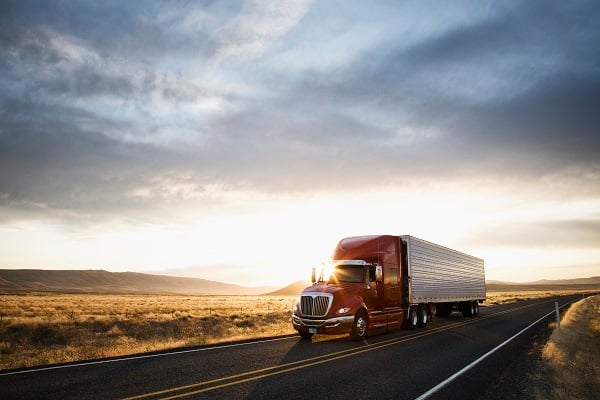
The California Air Resources Board (CARB) has proposed to repeal the High-Priority and Drayage components of the Advanced Clean Fleets (ACF) regulations. The proposal also includes changes to the Low Carbon Fuel Standard (LCFS) regulations and implements AB 1594 (flexibility for public utilities).



Congress Eliminates Corporate Average Fuel Economy (CAFE) Penalties for Passenger Cars and Light Trucks
In one of its many changes, the One Big Beautiful Bill Act, enacted on July 4, 2025, eliminated civil penalties for noncompliance with federal fuel economy standards. Specifically, Section 40006 of the Act amends the language of the Corporate Average Fuel Economy (CAFE) statute to reset the maximum civil penalty to $0.00. Although the statute and its implementing regulations otherwise remain in place, this amendment removes any civil penalties for producing passenger cars and light trucks that do not meet fuel economy requirements.